







Copper cookware and utensils have a distinctive warmth and elegance that few other metals can match. From traditional copper handis and patilas to serving bowls, fry pans, glasses and decorative pieces, copper has been part of Indian homes and kitchens for generations.
However, there is one common question that almost every copperware owner eventually asks:
“Why is my copper turning black?”
The good news is that darkening, tarnishing and loss of shine are generally natural characteristics of copper. Copper reacts with oxygen, moisture and other substances in its surroundings, causing its bright reddish-orange surface to gradually become darker. Ashtok also notes that copper products naturally tarnish and oxidize over time.
The solution isn't to stop using copper—it is to learn proper copper utensil care.
With the right cleaning method, regular drying and suitable storage, you can significantly reduce tarnishing and keep your copper cookware looking beautiful for years.
Why Does Copper Turn Black?
Before learning how to prevent copper from turning black, it helps to understand why it happens.
Copper is a reactive metal. When its surface comes into contact with oxygen and moisture in the air, it gradually undergoes oxidation. This changes the appearance of the metal.
Several things can accelerate this process:
- Water left on the surface
- Humidity
- Exposure to air
- Salt and acidic ingredients
- Food residue
- Harsh cleaning chemicals
- Dishwasher detergents
- Improper storage
- Failure to dry copper utensils after washing
The resulting surface may appear dull, brown, dark or blackish rather than the original bright copper colour.
This does not necessarily mean your copper utensil is damaged. In many cases, it is simply tarnish or oxidation, which can be removed with appropriate cleaning.
Ashtok specifically recommends hand-washing copperware and drying it after washing because excess water can leave spots and contribute to further cleaning requirements.
Is It Normal for Copper to Turn Black?
Yes. Copper tarnishing is a natural process.
Unlike some modern cookware finishes that are designed to remain visually unchanged, traditional copper develops a patina over time. Some people actually appreciate this darker, antique appearance.
However, if you prefer the bright polished look of new copper, regular maintenance is important.
The goal isn't necessarily to prevent oxidation completely—because that is difficult with natural copper—but to slow down tarnishing and remove it before it becomes heavy.
This is particularly important for decorative copperware and serving pieces where appearance matters.
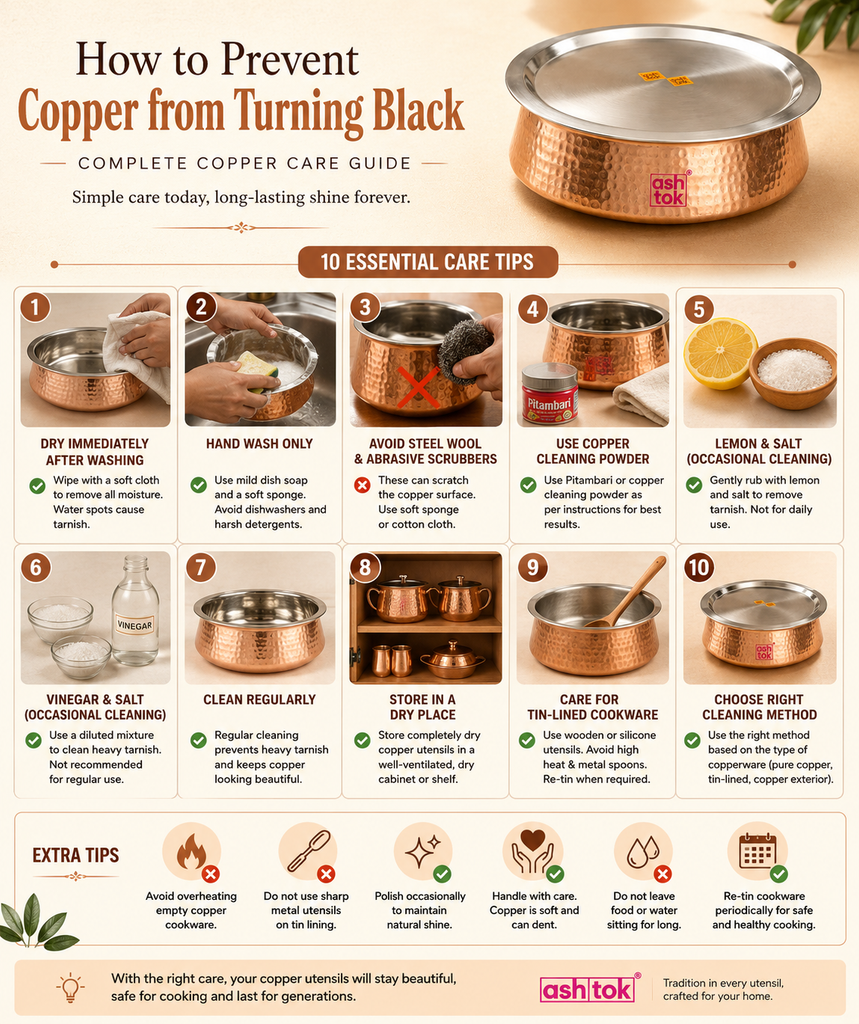
10 Ways to Prevent Copper from Turning Black
1. Always Dry Copper Immediately After Washing
One of the simplest and most effective copper care tips is also one of the easiest to overlook.
After washing your copper utensil, don't leave it sitting wet on the kitchen counter.
Instead:
- Rinse the utensil thoroughly.
- Shake off excess water.
- Wipe the entire surface with a soft cotton or microfiber cloth.
- Allow it to air-dry completely before storing.
Water spots can become particularly noticeable on polished copper. Ashtok recommends wiping extra water from copper and brass items after use.
Quick tip: Keep a dedicated soft cloth near your copper cookware so that drying becomes part of your normal cleaning routine.
2. Hand-Wash Copper Instead of Using a Dishwasher
If you want to maintain the finish of copper utensils, hand washing is the safer choice.
Dishwasher detergents can be aggressive and may accelerate oxidation or damage the surface. Ashtok's copper care instructions specifically recommend hand washing and avoiding dishwashers.
For everyday cleaning, use:
- Mild dish soap
- Lukewarm or warm water
- A soft sponge
- A soft cotton cloth
Avoid putting valuable handcrafted copper cookware into a dishwasher simply for convenience.
3. Avoid Steel Wool and Abrasive Scrubbers
A common mistake when cleaning tarnished copper is to scrub harder.
Copper is relatively soft compared with many other cookware materials. Steel wool, rough scouring pads and abrasive cleaners can leave scratches on the surface.
Instead, use a soft sponge or cotton cloth.
4. Use Copper Cleaning Powder for Regular Polishing
For copper cookware and utensils that have developed visible tarnish, a dedicated copper cleaning powder, traditionally known as Pitambari powder, can be useful..
A basic process is:
- Wash the utensil to remove food residue.
- Apply the recommended amount of copper cleaning powder.
- Gently rub the exterior using a soft cloth.
- Rinse thoroughly.
- Dry immediately.
Always follow the instructions supplied with the particular cleaning product.
This method is particularly useful when your goal is to restore the shine of copper utensils rather than simply remove food residue.
5. Try Lemon and Salt for Occasional Copper Cleaning
Lemon and salt are traditional household ingredients frequently used for cleaning copper.
The acidity of lemon juice helps loosen tarnish, while salt provides gentle physical action.
A simple method is:
- Cut a lemon in half.
- Sprinkle a small amount of salt over the cut surface.
- Gently rub it over the copper exterior.
- Rinse thoroughly with water.
- Dry immediately using a soft cloth.
Important:
Don't use acidic cleaning methods excessively, especially on cookware with a tin lining (kalai).
6. Vinegar and Salt Can Help Remove Tarnish
Another traditional method for how to remove tarnish from copper involves vinegar and salt.
It is recommended to use a diluted mixture of equal quantities of vinegar or lemon juice and salt with water, while emphasizing that it should not be used regularly.
For light surface tarnish, apply the diluted mixture carefully to the copper exterior, gently rub, rinse thoroughly and dry.
Because vinegar is acidic, avoid unnecessarily prolonged contact and don't use this technique as an everyday cleaning method.
For valuable or delicate handcrafted pieces, always test a small inconspicuous area first.
7. Clean Copper Regularly Instead of Waiting for Heavy Tarnish
One of the biggest secrets to maintaining beautiful copper cookware is consistency.
You don't have to wait until your copper utensil turns completely black before cleaning it.
A simple routine works better:
After every use
- Remove food residue.
- Wash gently.
- Rinse.
- Dry completely.
Every few uses
- Inspect the surface for water spots or dull areas.
- Give the exterior a gentle polish if necessary.
When tarnishing becomes noticeable
- Use an appropriate copper cleaner or occasional natural cleaning method.
Regular maintenance makes copper cleaning at home much easier.
8. Store Copper Utensils in a Dry Place
Humidity can encourage oxidation, so storage is an important part of copper cookware care.
After cleaning and completely drying your copperware, store it in:
- A dry kitchen cabinet
- A clean shelf
- A dry cupboard
- A well-ventilated storage area
Avoid storing wet copper utensils inside closed cabinets.
If several copper utensils are stacked together, make sure they are completely dry before stacking them.
9. Pay Special Attention to Tin-Lined Copper Cookware
Not all copper cookware has the same construction.
Traditional copper cooking vessels may have a tin lining, also called kalai, on the interior. This lining provides a food-contact surface between the copper and the food.
For tin-lined cookware, care goes beyond simply keeping the exterior shiny.
Ashtok recommends:
- Using wooden, silicone or nylon utensils.
- Avoiding sharp metal utensils.
- Avoiding overheating an empty pan.
- Using low to medium heat where appropriate.
- Having the vessel re-tinned when the lining shows significant wear.
If the tin lining becomes badly worn and copper is exposed on the food-contact surface, don't treat it simply as a cosmetic tarnishing issue. Have the cookware assessed and re-tinned as appropriate.
10. Choose the Right Cleaning Method for the Type of Copperware
Not every copper item should be cleaned in exactly the same way.
Pure copper utensils
These can generally be hand-washed and polished periodically to maintain their appearance.
Tin-lined copper cookware
The interior requires special care because the tin lining can be scratched or damaged.
Copper-plated or copper-exterior cookware
Some Ashtok products combine copper on the exterior with stainless steel on the interior. For example, Ashtok's hammered copper handi and serving pieces can have a stainless-steel interior with a copper exterior.
For these products, always follow the product-specific care instructions rather than assuming they should be treated exactly like pure copper.
How to Clean Blackened Copper: Step-by-Step
If your copper utensil has already turned dark, don't panic.
Try this basic process:
Step 1: Remove food residue
Wash the utensil with mild soap and warm water.
Step 2: Dry the surface
Use a soft cloth to remove all excess moisture.
Step 3: Examine the tarnish
Determine whether you're dealing with light dullness, brown tarnish or heavier dark oxidation.
Step 4: Choose a suitable cleaner
For regular maintenance, use a copper cleaning powder according to its instructions.
For occasional natural cleaning, lemon and salt or diluted vinegar and salt can be used on suitable copper surfaces.
Step 5: Rub gently
Never attack the surface with steel wool or aggressive scrubbers.
Step 6: Rinse thoroughly
Remove all traces of the cleaning mixture.
Step 7: Dry immediately
This final step is essential.
Step 8: Polish if required
Use a soft cloth to restore the copper's natural shine.
Common Mistakes That Make Copper Turn Black Faster
If your copper keeps becoming dark soon after cleaning, check whether you're making one of these mistakes.
❌ Putting copper in the dishwasher
Dishwasher detergents can accelerate oxidation and damage copper surfaces.
❌ Leaving water on copper
Water spots can form and contribute to a dull appearance.
❌ Using steel wool
It can scratch the surface.
❌ Using harsh chemicals
Aggressive cleaners may damage the finish.
❌ Using lemon or vinegar every day
Acidic cleaners are better treated as occasional tarnish-removal methods rather than daily cleaners.
❌ Storing copper while it is still wet
Moisture encourages discoloration.
❌ Overheating tin-lined cookware
Excessive heat can damage the lining.
How Often Should You Clean Copper Utensils?
There isn't one fixed schedule because cleaning frequency depends on how often you use the utensil and the environment in which it is stored.
For daily-use copper cookware, wash and dry it after every use.
For copper servingware, clean it after each use and polish it when the surface becomes noticeably dull.
For decorative copper items, dust them regularly and polish them when tarnishing becomes visible.
The key is to avoid allowing heavy tarnish to build up for long periods.
Why Choose Handcrafted Copper Cookware from Ashtok?
Copper cookware isn't only about appearance. It combines traditional Indian craftsmanship with the excellent thermal properties associated with copper.
Ashtok's copper cookware collection includes copper pots, patilas, handis, fry pans, saucepans and other traditional kitchenware. The company's copper cookware collection highlights copper's high thermal conductivity and its ability to distribute heat efficiently.
Handcrafted copperware can also have subtle variations in hammering, texture and finish. These differences are part of the character of handmade metalware rather than imperfections.
Ashtok's artisan story explains that copper pieces are shaped, heated, hammered and polished by skilled craftspeople, giving each piece its distinctive appearance.
If you're looking for traditional copper cookware, you can explore Ashtok's Copper Cookware Collection for different types of pots, pans and cooking vessels.
For traditional cooking and serving, Ashtok's Copper Handi collection is another option.
Copper's changing appearance is part of its natural character. Rather than seeing tarnishing as a reason to avoid copperware, think of it as a reminder that this traditional metal requires a little care.
With these simple habits, your copper utensils, copper cookware, copper handis and servingware can retain their distinctive beauty and remain useful for years.
Traditional copperware deserves to be used—not hidden away in a cupboard. With proper copper utensil care, you can enjoy both its timeless appearance and the craftsmanship behind every handcrafted piece.
Explore Ashtok's Copper Utensils to discover handcrafted copper plates, glasses, pots, handis, water vessels and other traditional copperware.