







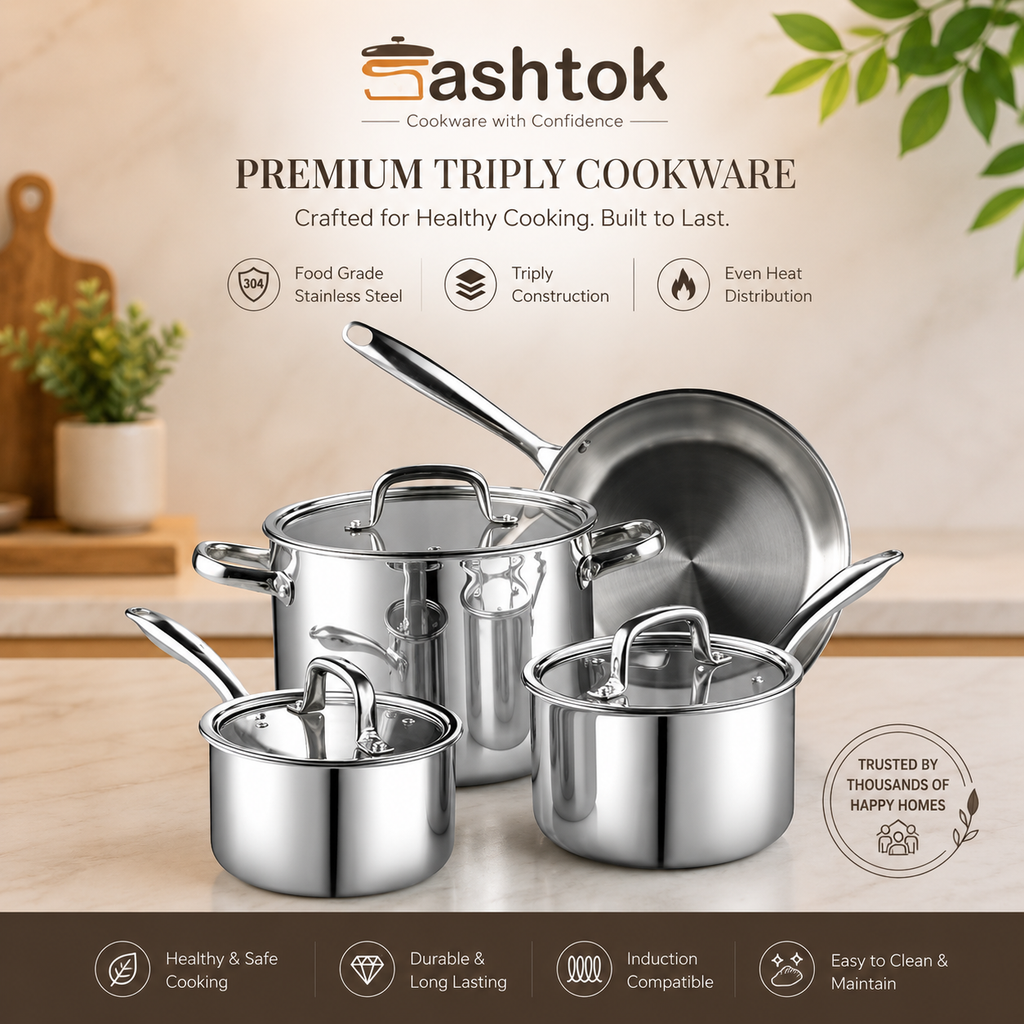
Choosing the right cookware is one of the most important decisions for every home cook. Whether you're preparing everyday meals or experimenting with gourmet recipes, the cookware you use directly affects cooking performance, food quality, energy consumption, and even your family's health.
For decades, aluminum cookware has been a popular choice because it is lightweight, affordable, and heats up quickly. However, with growing awareness about healthy cooking and long-lasting kitchen investments, triply cookware has become the preferred option for modern kitchens.
But which one is actually better?
Should you continue using traditional aluminum cookware, or is it worth upgrading to triply stainless steel cookware?
In this comprehensive guide, we'll compare Triply vs Aluminum Cookware across every important factor—from heat distribution and durability to safety, maintenance, and overall value—so you can make an informed decision for your kitchen.
What is Aluminum Cookware?
Aluminum cookware is made from aluminum metal, which is known for its excellent heat conductivity. Because aluminum transfers heat quickly, food cooks faster while consuming less energy.
Most traditional Indian kitchens have used aluminum cookware for decades because it is:
- Affordable
- Lightweight
- Easy to handle
- Available in various shapes and sizes
However, pure aluminum is a relatively soft metal. It scratches easily, dents under pressure, and may react with acidic foods like tomatoes, tamarind, vinegar, and lemon juice.
To improve durability, many manufacturers now offer anodized aluminum cookware. While anodizing creates a harder surface, it still cannot match the durability and premium feel of triply cookware.
Advantages of Aluminum Cookware
- Excellent heat conductivity
- Lightweight and easy to lift
- Faster cooking
- Budget-friendly
- Widely available
- Suitable for everyday cooking
Disadvantages of Aluminum Cookware
- Reacts with acidic ingredients
- Can discolor over time
- Scratches easily
- Not as durable as stainless steel
- May warp under high temperatures
- Shorter lifespan
What is Triply Cookware?

Triply cookware is an advanced type of stainless steel cookware made using three bonded layers of metal.
A typical premium triply utensil consists of:
Inner Layer
Food-grade 304 Stainless Steel
This layer comes into direct contact with food. It is non-reactive, hygienic, corrosion-resistant, and preserves the natural taste of ingredients.
Middle Layer
Pure Aluminum Core
This layer spreads heat evenly throughout the utensil, eliminating hot spots and ensuring consistent cooking.
Outer Layer
Induction-compatible Stainless Steel
The outer layer provides durability, magnetic compatibility for induction cooktops, and excellent structural strength.
This combination delivers the advantages of both stainless steel and aluminum while minimizing their individual drawbacks.
Why Triply Construction is Superior
Unlike ordinary stainless steel utensils that heat unevenly, triply cookware combines the strength of stainless steel with the excellent heat conductivity of aluminum.
The result is:
- Uniform cooking
- Better browning
- Faster heat distribution
- Reduced chances of burning food
- Greater energy efficiency
- Longer lifespan
Professional chefs around the world prefer triply cookware because of its consistent performance.
Triply vs Aluminum Cookware: Quick Comparison
| Feature | Triply Cookware | Aluminum Cookware |
|---|---|---|
| Material | Three bonded layers | Single metal |
| Heat Distribution | Excellent | Very Good |
| Heat Retention | Excellent | Moderate |
| Food Safety | Excellent | Can react with acidic foods |
| Durability | Excellent | Moderate |
| Scratch Resistance | High | Low |
| Induction Compatible | Yes | Usually No |
| Dishwasher Safe | Yes | Depends on finish |
| Lifespan | 15–25 years | 5–10 years |
| Appearance | Premium | Basic |
| Maintenance | Easy | Moderate |
| Initial Cost | Higher | Lower |
| Long-Term Value | Excellent | Average |
Health Comparison: Which Cookware is Safer?
Health has become one of the biggest factors when selecting cookware.
Let's compare both options.
Aluminum Cookware
Although aluminum is generally considered safe for cooking, the metal may react with acidic foods.
Examples include:
- Tomato curry
- Sambar
- Rasam
- Lemon rice
- Tamarind gravy
- Vinegar-based dishes
This reaction may:
- Alter food flavor
- Cause discoloration
- Increase wear on cookware
Many people therefore prefer cookware that remains completely non-reactive.
Triply Cookware
The inner cooking surface is made from food-grade stainless steel.
This means:
- No metallic taste
- No chemical coating
- No reaction with acidic foods
- Hygienic cooking surface
- Easy cleaning
- Better food preservation
Since only stainless steel touches your food, you enjoy the benefits of aluminum's heat conductivity without exposing food directly to aluminum.
This makes triply cookware an excellent choice for families focused on healthy everyday cooking.
Heat Distribution: The Biggest Difference

One of the most noticeable differences between aluminum and triply cookware is how heat is distributed.
Aluminum Cookware
Aluminum heats up rapidly, which is one of its greatest strengths. However, thinner aluminum utensils often develop hot spots, where certain areas become much hotter than others.
This can lead to:
- Burnt spices
- Uneven cooking
- Food sticking
- Overcooked edges
Triply Cookware
The aluminum core is fully enclosed between stainless steel layers, allowing heat to spread evenly across the entire cooking surface.
Benefits include:
- Even cooking
- Better control over flame
- Uniform browning
- Reduced burning
- Improved flavor development
Whether you're preparing biryani, dal, curries, stir-fries, or sautéed vegetables, triply cookware delivers more consistent results.
Why Heat Distribution Matters in Indian Cooking

Indian recipes often require slow cooking, roasting spices, simmering gravies, and layered dishes like biryani.
Uneven heating can easily burn spices while leaving the rest of the dish undercooked.
Triply cookware minimizes these issues by maintaining a steady cooking temperature, making it ideal for traditional Indian recipes that demand precision.
Cooking Performance: Which Cookware Delivers Better Results?
Cooking performance is about more than just how quickly a pan heats up. It also includes heat retention, temperature control, and the ability to cook food evenly without burning.
Aluminum Cookware
Aluminum cookware heats very quickly, making it suitable for fast cooking. However, it also loses heat quickly when ingredients are added, especially cold foods. Thin aluminum cookware may require constant flame adjustments to prevent food from burning.
While it performs well for boiling and simple cooking tasks, it may struggle with recipes that require slow simmering or precise temperature control.
Triply Cookware
Triply cookware is engineered to provide consistent heat throughout the cooking process. The aluminum core spreads heat evenly, while the stainless steel layers retain that heat for longer.
This results in:
- Better control over cooking temperatures
- Uniform browning of food
- Less sticking
- Better caramelization
- Even cooking from the center to the edges
Whether you're preparing biryani, paneer butter masala, dal makhani, stir-fried vegetables, or slow-cooked curries, triply cookware helps deliver restaurant-quality results.
Durability and Lifespan
One of the biggest advantages of triply cookware is its exceptional durability.
Aluminum Cookware
Although aluminum is lightweight, it is relatively soft. Over time, it can:
- Dent easily
- Scratch frequently
- Warp under high temperatures
- Lose its original shape
With regular use, aluminum cookware typically lasts between 5 and 10 years, depending on quality and maintenance.
Triply Cookware
Triply cookware is built for long-term use. The bonded stainless steel layers make it highly resistant to:
- Rust
- Corrosion
- Warping
- Scratches
- High cooking temperatures
A high-quality triply cookware set can last 15–25 years or even longer with proper care, making it a smart long-term investment.
Energy Efficiency
Energy-efficient cookware not only saves money but also reduces cooking time.
Aluminum Cookware
Aluminum heats up rapidly but cools down just as quickly. This means you may need to keep the burner on for longer to maintain the desired cooking temperature.
Triply Cookware
Because triply cookware distributes and retains heat efficiently, food continues cooking even after reducing the flame.
Benefits include:
- Lower gas consumption
- Reduced electricity usage on induction cooktops
- Faster cooking times
- Improved energy efficiency
Many chefs recommend cooking on medium flame with triply cookware, which helps save energy without compromising cooking performance.
Cleaning and Maintenance
The ease of cleaning is another important factor when choosing cookware.
Aluminum Cookware
Aluminum cookware may become stained or discolored over time, especially when exposed to acidic foods. It often requires gentle cleaning to avoid scratches.
Some aluminum utensils are not dishwasher-safe, depending on the finish.
Triply Cookware
Triply cookware is extremely easy to maintain.
Simply:
- Wash with mild dish soap
- Use a soft sponge
- Dry after washing
Most triply cookware is dishwasher-safe and retains its polished appearance for years with minimal effort.
Induction Compatibility
Modern kitchens increasingly use induction cooktops.
Aluminum Cookware
Standard aluminum cookware does not work on induction stoves unless it has a magnetic induction base.
Triply Cookware
The outer stainless steel layer is induction-compatible, making triply cookware suitable for:
- Gas stoves
- Induction cooktops
- Electric cooktops
- Ceramic hobs
This versatility makes triply cookware a future-ready choice for every kitchen.
Cost Comparison: Is Triply Worth the Higher Price?
Many buyers initially compare cookware based on price.
| Feature | Aluminum | Triply |
|---|---|---|
| Initial Cost | Lower | Higher |
| Lifespan | 5–10 years | 15–25 years |
| Replacement Frequency | Higher | Lower |
| Long-Term Value | Moderate | Excellent |
Although triply cookware costs more upfront, its durability and performance often make it more economical over time. Instead of replacing worn-out cookware every few years, a well-made triply utensil can serve your family for decades.
Why Choose Ashtok Triply Cookware?

At Ashtok, we believe cookware should combine performance, durability, and timeless design.
Our premium triply cookware is crafted using high-quality materials to deliver consistent cooking results while complementing modern Indian kitchens.
Features of Ashtok Triply Cookware
- Premium food-grade 304 stainless steel interior
- High-conductivity aluminum core for even heat distribution
- Durable induction-compatible stainless steel exterior
- Suitable for gas and induction cooking
- Elegant mirror finish
- Strong riveted handles for a secure grip
- Corrosion-resistant construction
- Easy to clean and maintain
- Designed for everyday Indian cooking
Whether you're preparing a quick breakfast or a festive family meal, Ashtok Triply Cookware offers the reliability and performance you need.
Frequently Asked Questions
1. Is triply cookware healthier than aluminum cookware?
Yes. The cooking surface of triply cookware is food-grade stainless steel, which is non-reactive and ideal for cooking acidic foods without affecting their taste.
2. Does triply cookware cook food faster?
Triply cookware distributes heat more evenly, helping food cook efficiently while reducing the risk of burning.
3. Can triply cookware be used on induction stoves?
Yes. Most triply cookware, including Ashtok products, is compatible with induction cooktops.
4. Why is triply cookware more expensive?
The three-layer construction, premium materials, and superior durability contribute to its higher initial cost, but it offers excellent long-term value.
5. Is aluminum cookware safe?
Aluminum cookware is generally safe for everyday cooking, but it can react with highly acidic foods, which may affect flavor and the cookware's appearance.
6. Does food stick to triply cookware?
When preheated correctly and used with the appropriate amount of oil or butter, triply cookware minimizes sticking and delivers excellent cooking performance.
7. How long does triply cookware last?
With proper care, high-quality triply cookware can last 15–25 years or more.
8. Can I use metal spoons with triply cookware?
Yes, although wooden or silicone utensils are recommended to maintain the polished finish for longer.
9. Is triply cookware dishwasher-safe?
Most premium triply cookware is dishwasher-safe, though hand washing helps preserve its shine.
10. Is triply cookware worth buying?
Absolutely. Its durability, cooking performance, health benefits, and long lifespan make it an excellent investment for any kitchen.

Both aluminum and triply cookware have their place in the kitchen. Aluminum remains a practical choice for those seeking lightweight, budget-friendly cookware for basic cooking needs.
However, if you're looking for cookware that offers superior heat distribution, long-lasting durability, healthier cooking, and compatibility with modern kitchens, triply cookware is the clear winner.
Its ability to combine the strength of stainless steel with the heat-conducting properties of aluminum makes it one of the best cookware choices available today.
Investing in quality triply cookware means investing in better cooking experiences, greater convenience, and cookware that will serve your family for years to come.
When you choose Ashtok Triply Cookware, you're choosing thoughtfully designed kitchen essentials built for everyday Indian cooking—delivering performance, elegance, and reliability in every meal.