







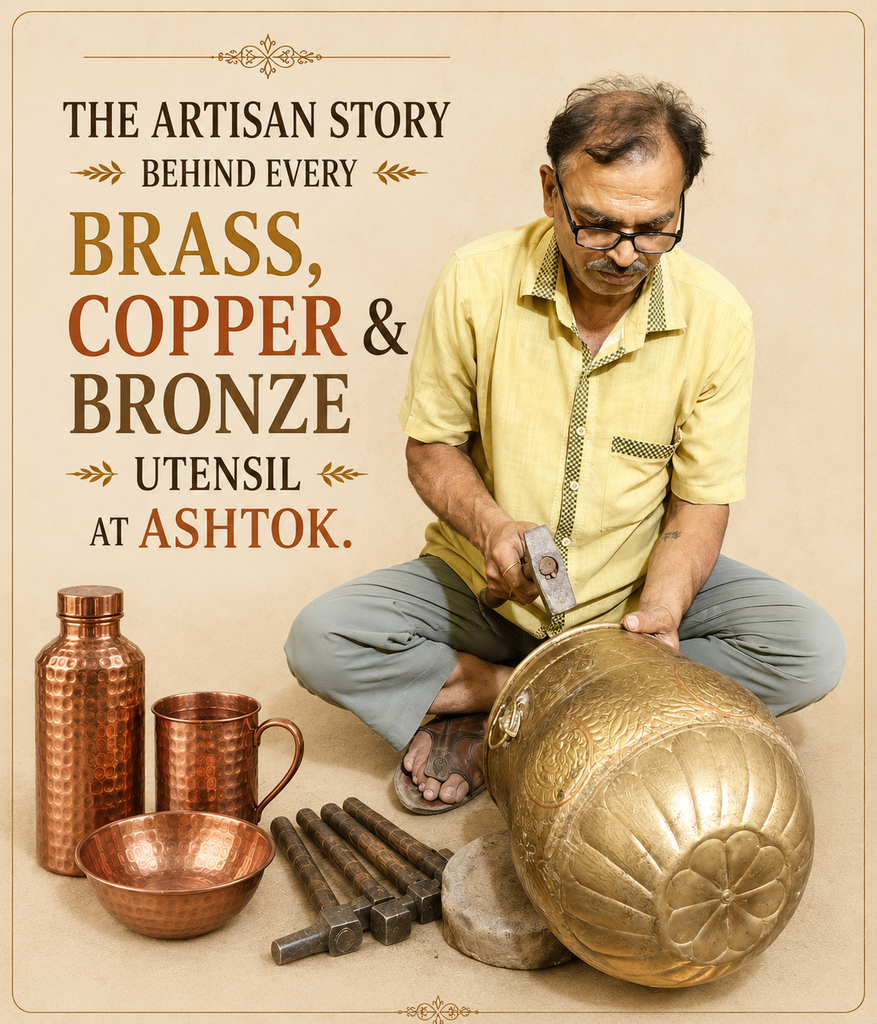
The Artisan Story Behind Every Brass, Copper & Bronze Utensil at Ashtok
In a world dominated by factory-made products and mass production, handcrafted metalware carries a story that machines can never replicate. Every hammer mark, every engraving, and every polished surface tells the tale of an artisan whose skills have been passed down through generations.
At Ashtok, we believe that brass, copper, and bronze utensils are not just kitchen essentials—they are pieces of India's living heritage. Behind every handi, thali, glass, or pooja item is an artisan who has dedicated years to mastering the art of metal craftsmanship.
This is their story.
The Legacy of Indian Metal Craftsmanship
India has a centuries-old tradition of crafting utensils and decorative pieces using brass, copper, and bronze. Long before modern cookware became popular, Indian households relied on these metals for cooking, serving, and storing food.
Ancient texts and archaeological discoveries reveal that metal utensils were an essential part of Indian culture. From royal kitchens to village homes, brass and copper vessels symbolized prosperity, health, and craftsmanship.
Even today, skilled artisans continue these traditions using techniques that have remained largely unchanged for generations.
At Ashtok, our mission is to preserve this legacy while making authentic handcrafted products accessible to modern homes around the world.
The Hands Behind Every Creation
When you hold a handcrafted brass handi or a copper tumbler, you are holding the work of multiple artisans.
A single piece often passes through several skilled hands:
- Metal sheet makers
- Traditional smiths
- Hammering specialists
- Casting experts
- Engraving artisans
- Polish craftsmen
- Quality inspectors
Each artisan contributes their expertise to create a finished product that combines beauty, functionality, and durability.
Unlike machine-made products, no two handcrafted pieces are exactly alike. The subtle variations in texture and finish are a signature of human craftsmanship.
Brass Utensils: A Tradition Forged with Precision
Brass is one of India's most cherished metals. Made from copper and zinc, brass is known for its golden appearance, durability, and versatility.
Crafting brass utensils is an art that requires patience and precision.
Step 1: Selecting the Raw Material
The journey begins with selecting high-quality brass sheets or ingots.
Experienced craftsmen inspect:
- Purity of metal
- Thickness
- Strength
- Workability
Only premium-grade materials are chosen to ensure longevity and performance.
Step 2: Shaping the Utensil
Traditional artisans use:
- Wooden mallets
- Iron hammers
- Manual spinning machines
- Heating furnaces
The metal is heated and carefully shaped into:
- Biryani handis
- Pooja thalis
- Urlis
- Bowls
- Water pots
- Serving dishes
This process may take several hours or even days depending on the complexity of the design.
Step 3: Hammering and Finishing
The distinctive handcrafted texture on brass utensils comes from repeated hammering.
This process:
- Strengthens the metal
- Improves durability
- Creates beautiful surface patterns
- Makes every piece unique
After shaping, the utensil is polished by hand to achieve its characteristic golden glow.
Copper Utensils: The Art of Wellness and Elegance
Copper has been an integral part of Indian households for thousands of years.
Today, copper bottles, tumblers, cookware, and serving ware are gaining popularity once again as people seek traditional and sustainable alternatives.
But few realize the craftsmanship involved in making them.
The Copper Crafting Process
Creating a copper utensil requires extraordinary skill.
The artisan begins with pure copper sheets which are:
- Cut into precise dimensions.
- Heated repeatedly.
- Hand-shaped into the desired form.
- Hammered to strengthen the structure.
- Polished to reveal copper's natural brilliance.
Every step is performed carefully to preserve the metal's integrity.
The result is a utensil that is:
- Durable
- Elegant
- Timeless
- Environment friendly
Bronze: The Metal of Heritage
Bronze, traditionally known as Kansa in many parts of India, has occupied a special place in Indian kitchens and rituals.
Made primarily from copper and tin, bronze is admired for:
- Exceptional durability
- Rich appearance
- Unique acoustic qualities
- Traditional significance
Creating bronze utensils requires a different approach compared to brass and copper.
The Ancient Art of Bronze Casting
Unlike sheet metal utensils, many bronze products are created using casting techniques.
Melting the Metals
Copper and tin are melted together at controlled temperatures.
The artisan carefully monitors:
- Temperature
- Alloy ratio
- Fluidity of molten metal
Even a slight variation can affect the final quality.
Pouring Into Moulds
The molten bronze is poured into handcrafted moulds.
Once cooled, the rough casting is removed and refined.
This stage involves:
- Filing
- Grinding
- Manual shaping
- Surface finishing
- Polishing
The final product reflects the artisan's years of experience.
Generations of Knowledge Passed Down
Many Indian metal artisans belong to families that have practiced this craft for generations.
A child often learns by watching:
- Their father hammer brass.
- Their mother polish copper vessels.
- Their grandparents create intricate engravings.
Skills are not taught in classrooms.
They are passed from one generation to another through:
- Observation
- Practice
- Mentorship
- Experience
This living tradition is one of India's greatest cultural treasures.
The Challenges Faced by Traditional Artisans
Despite their remarkable skills, artisans face many challenges today.
Competition from Machine-Made Products
Mass-produced items are cheaper and quicker to manufacture.
As a result:
- Handmade crafts face pricing pressure.
- Younger generations may leave the profession.
- Traditional skills risk disappearing.
Rising Raw Material Costs
Copper, brass, and bronze prices have increased significantly over the years.
Artisans must balance:
- Material quality
- Affordability
- Profitability
while maintaining traditional production methods.
Limited Market Access
Many artisans work in small workshops.
Without access to:
- Modern marketing
- Online platforms
- Global customers
their reach remains limited.
This is where brands like Ashtok play an important role by connecting artisans with customers who appreciate authentic craftsmanship.
Why Handcrafted Utensils Are Different
A handcrafted utensil carries something that factory-made products cannot replicate.
Character
Small variations in texture, hammer marks, or finish make every piece unique.
Human Touch
Each utensil reflects the artisan's experience, dedication, and creativity.
Sustainability
Handcrafted products:
- Last for decades
- Are repairable
- Reduce dependence on disposable materials
- Promote traditional industries
Cultural Connection
Owning handcrafted metalware means preserving a piece of India's heritage.
Bringing Traditional Craftsmanship into Modern Homes
Today's kitchens are evolving.
People are looking for products that are:
- Sustainable
- Long-lasting
- Beautiful
- Rooted in tradition
Brass, copper, and bronze utensils perfectly fit this lifestyle.
Modern homeowners use them for:
Everyday Cooking
Traditional handis and cookware distribute heat evenly and elevate the cooking experience.
Serving Guests
Elegant metal serveware adds warmth and sophistication to dining tables.
Home Décor
Urli bowls, lamps, and decorative pieces bring timeless beauty to living spaces.
Wellness Rituals
Copper bottles and tumblers have become popular choices for mindful living.
Supporting Artisans Through Conscious Choices
Every purchase has an impact.
When you choose handcrafted metalware, you support:
- Skilled craftsmen
- Family-run workshops
- Traditional industries
- Sustainable production methods
You help ensure that these crafts survive for future generations.
Your purchase becomes more than a product.
It becomes a contribution toward preserving cultural heritage.
The Ashtok Commitment
At Ashtok, we are proud to work with artisans and craftsmen who have dedicated their lives to preserving India's metalworking traditions.
Our goal is simple:
- Preserve traditional craftsmanship.
- Deliver authentic brass, copper, and bronze products.
- Support artisan communities.
- Bring timeless Indian heritage into modern homes.
Every handi, pooja thali, copper bottle, bronze bowl, or decorative piece we offer carries a story.
A story of skill.
A story of tradition.
A story of generations.
And most importantly, a story of people whose hands transform raw metal into something meaningful.
Preserving Heritage for the Future
As the world moves toward automation, handcrafted products remind us of the value of patience, artistry, and human creativity.
The artisan's hammer still echoes in workshops across India.
The glow of molten bronze still lights traditional foundries.
The rhythm of hand-polishing still gives life to brass and copper utensils.
These are not merely objects.
They are heirlooms.
They are cultural expressions.
They are stories forged in metal.
When you bring a handcrafted brass handi, a copper tumbler, or a bronze bowl into your home, you become part of that story.
You become a custodian of a tradition that has survived centuries—and will continue to inspire generations to come.
Frequently Asked Questions (FAQ)
1. Why are handcrafted brass utensils special?
Handcrafted brass utensils are unique because they are made by skilled artisans using traditional techniques. Each piece carries subtle variations and detailing that cannot be replicated by machines.
2. How are copper utensils made?
Copper utensils are typically made by cutting pure copper sheets, heating them, shaping them manually, hammering for strength, and polishing to achieve their signature finish.
3. What is bronze or Kansa made of?
Bronze, often known as Kansa in India, is an alloy primarily made of copper and tin. It is known for its durability, traditional significance, and elegant appearance.
4. Are handcrafted utensils better than machine-made products?
Handcrafted utensils offer unique craftsmanship, stronger cultural value, durability, and sustainability. Many people prefer them because they support traditional artisans and preserve heritage crafts.
5. Why do handcrafted brass or copper utensils have slight variations?
Small differences in texture, hammer marks, or finish are natural characteristics of handmade products. These variations are considered signs of authenticity and craftsmanship.
6. How do handcrafted utensils support artisans?
Purchasing handcrafted utensils provides income to artisan families, helps preserve traditional skills, and encourages younger generations to continue these age-old crafts.
7. Can handcrafted brass, copper, and bronze utensils be used in modern homes?
Yes. These utensils are widely used today for cooking, serving, home décor, wellness practices, and gifting. They combine traditional craftsmanship with modern functionality.
8. Where can I buy authentic handcrafted brass, copper, and bronze utensils?
You can explore a wide collection of authentic handcrafted metalware at Ashtok Official Store, featuring brass, copper, bronze, pooja items, cookware, serveware, and home décor inspired by India's artisan traditions.